

Premature Ejaculation
Dapoxetine Hydrochloride
Lidocaine
Erectile Dysfunction Treatment
Generic Viagra
- Kamagra Oral Jelly 100 mg
- Fildena 100 mg
- Vega Extra Cobra 120 mg
- Cenforce Professional
- Aurogra 100 mg
- Malegra 200 mg
- Cenforce 100 mg
- Cenforce 150 mg
- Cenforce 200 mg
Generic Cialis
Generic Levitra
Pain Meds
Pregabalin Capsules
Soma Pills
Tapentadol
Difference Between Benzocaine and Lidocaine for Premature Ejaculation
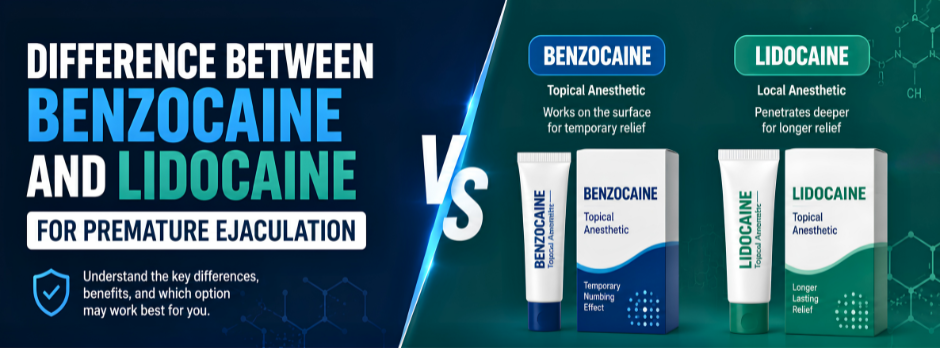
Premature ejaculation (PE) is a common sexual dysfunction affecting a large number of men around the globe. While there are several treatment options available, topical anesthetics like lidocaine and benzocaine have gained popularity due to their effectiveness in delaying ejaculation.
While both benzocaine and lidocaine are efficacious in desensitizing the penis, it’s crucial to understand the distinctions between the two. Depending on individual patients, one may be more potent than the other. In this guide, we will explore the differences between benzocaine and lidocaine for premature ejaculation in more detail.
What is Premature Ejaculation?
Premature ejaculation (PE) is a common men’s sexual health issue characterized by the inability to delay ejaculation during sexual activity. This condition affects between 20% and 30% of men at some point in their lives [1].
While the exact reason for PE is not fully understood, psychological factors such as anxiety, stress, and depression, as well as biological factors such as hormonal imbalances and genetics, are believed to play a role.
An Overview of Lidocaine and Benzocaine
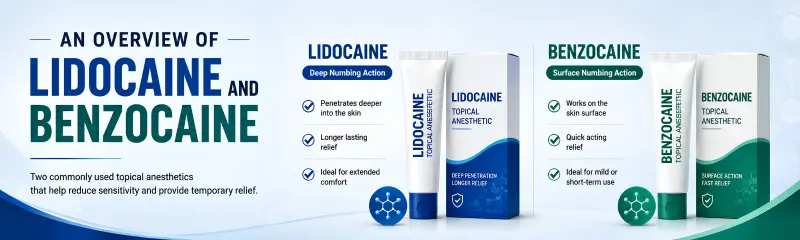
Lidocaine is a local anesthetic used in various medical surgeries to numb the skin. It has been commercially available since the 1940s. It is used to relieve pain, eczema, skin itching, and other medical conditions [2].
It works by blocking sodium channels that hinder the body from sending signals to the brain about sensation. The connection between the tissues and the brain is temporarily disconnected, which causes loss of sensation in the applied area.
With regard to premature ejaculation, lidocaine is used in products that numb the penis slightly to prevent early ejaculation. Some lidocaine-containing products for PE include lidocaine-based creams and sprays, like Stud 5000 desensitizing spray.
Benzocaine is another local anesthetic used as a numbing agent for pain management and skin problems such as scrapes and burns. It was initially developed for use in dentistry, and then it was used for other purposes throughout the medical sector.
The working mechanism of Benzocaine is similar to lidocaine, which involves blocking sodium channels, making it difficult for the brain to receive and understand signals from the application site.
Like lidocaine, benzocaine is used in gels, sprays, creams, amd wipes that slightly numb the penis to prevent PE in men.
A Quick Comparison of Lidocaine and Benzocaine
Below is a quick comparison between Benzocaine and Lidocaine [3].
| Differences | Benzocaine | Lidocaine |
| Onset | 2 to 5 minutes | 3 to 5 minutes |
| Strength | Weaker | Stronger |
| Prescription | Usually not | Depends on strength |
| Type | Ester anesthetic | Amide anesthetic |
| Duration of action | 30-60 minutes | 1-2 hours |
Difference Between Benzocaine and Lidocaine
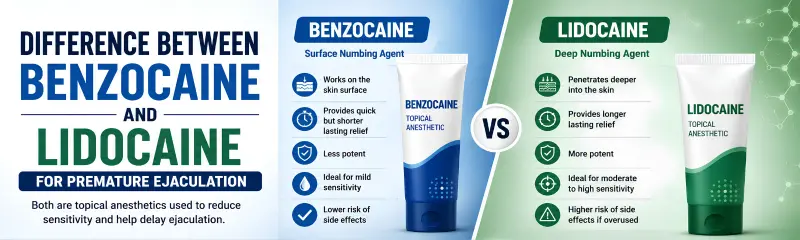
While lidocaine and benzocaine are both effective in managing premature ejaculation, there are some distinctions between the two that may influence which may be better for you [4] [5].
Potency
One of the main differences between lidocaine and benzocaine is their potency. Benzocaine is less powerful than lidocaine, but both have been found to be effective in managing premature ejaculation.
Onset of Action
Benzocaine starts showing its effects within 2 to 5 minutes, whereas the onset of lidocaine is 3 to 5 minutes.
Duration of action
The duration of action is also different between lidocaine and benzocaine. The effects of lidocaine last longer than benzocaine, with effects lasting for up to 1-2 hours after application. However, benzocaine may only last for 30-60 minutes.
Cost
The cost of lidocaine and benzocaine can also differ depending on the formulation, brand, and quantity purchased. In general, benzocaine is less expensive than lidocaine.
Risks and Side Effects
All local numbing agents can come with a low risk of side effects, including lidocaine and benzocaine.
However, adverse effects are relatively rare with both ingredients as long as these products are used as directed by a healthcare provider.
Benzocaine
Most individuals use benzocaine with no significant side effects.
However, general adverse reactions of topical benzocaine include:
- Skin irritation, such as redness, burning, or stinging.
- Swelling of the application area or slight warmth
- Blistering or flaking skin
Benzocaine can also cause an allergic reaction in some users, which may include symptoms like swelling of the face or mouth, hives, and difficulty breathing.
However, benzocaine may be more likely to cause an allergic reaction than lidocaine, and over-desensitization is also a risk when using benzocaine for premature ejaculation.
However, if this happens, simply wash off the applied area, and the sensitivity levels should return to normal soon after.
Lidocaine
Much like benzocaine, lidocaine can also cause adverse reactions. Side effects of lidocaine can include:
- Skin irritation, such as stinging, burning, or redness
- Itching at the application area
- Cracked, dry, or flaky skin
Note: In the event of any allergic reaction, discontinue using these products and seek medical attention.
Can You Use Benzocaine and Lidocaine Together?
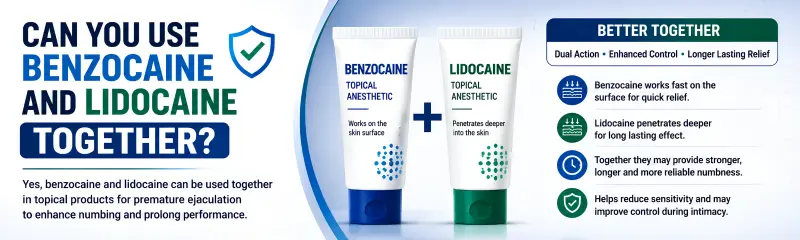
Since both lidocaine and benzocaine belong to the same group of drugs, using them together may cause adverse reactions such as severe dizziness, irregular heartbeat, drowsiness, and seizures. Both medicines provide relief from symptoms without addressing the underlying cause, and combining both may mask worsening of symptoms due to heightened numbing effects. Therefore, it is not advisable to use both these medications together [6].
Benzocaine vs Lidocaine: Which One Should You Use?
The right choice between benzocaine and lidocaine depends on your individual preferences. If you are looking for a less powerful option with fewer adverse effects, benzocaine may be a better option for you. However, if you want a more potent option with a longer duration of action, lidocaine may be the best option.
It is also important to remember that benzocaine and lidocaine are not suitable for everyone. You should avoid these medicines if you are allergic to them.
You should also consult your doctor before using benzocaine or lidocaine for safety or effectiveness.
Conclusion
Both benzocaine and lidocaine are potent topical anesthetics that can help delay ejaculation by temporarily reducing penile sensitivity. The main difference between benzocaine and lidocaine lies in their potency, duration of action, and safety profile. Lidocaine is generally stronger and provides longer-lasting numbing effects. Benzocaine, on the other hand, works quickly, is often more affordable, and may be suitable for those who prefer a milder numbing effect.
The right choice between lidocaine and benzocaine depends on your individual preferences. Whichever option you choose, use the product exactly as directed by a healthcare professional.
FAQs
What is the best numbing agent for premature ejaculation?
What's better, lidocaine or benzocaine for premature ejaculation?
Where to apply lidocaine for premature ejaculation?
What home remedy is good for premature ejaculation?
Does benzocaine make you sleepy?
Is benzocaine the same as lidocaine?
What is lidocaine?
References
- Premature ejaculation - current concepts in the management: A narrative review, nlm
- Lidocaine Vs Benzocaine Spray, nomorepe
- Benzocaine vs Lidocaine for Pain Relief: Duration, Safety & Effectiveness, curemeabroad
- Benzocaine vs. Lidocaine for Premature Ejaculation, rexmd
- Benzocaine Vs Lidocaine for Premature Ejaculation, promescent
- Benzocaine vs Lidocaine: Which is Better for Pain Relief? curistrelief.